Is a VPN Legal in the UAE? The Definitive, No-Panic Guide
If you’ve just landed at Dubai International Airport or unpacked your bags in a shiny new expat apartment, your first instinct was probably to connect…

Protect your online privacy and security
Fast, private, and easy to use, get Hidzo on your device and browse freely with one tap.
Get HidzoVPNTable of Contents
If you’ve just landed at Dubai International Airport or unpacked your bags in a shiny new expat apartment, your first instinct was probably to connect to the nearest Wi-Fi, open WhatsApp to reassure your family you made it, and… realize the call won’t connect.
Naturally, your next thought is downloading a privacy app, quickly followed by a mild panic attack fueled by internet rumors of million-dirham penalties. So, let’s settle your nerves right away: is VPN legal in the UAE? The short answer is a resounding yes.
Using a VPN is entirely legal for everyday digital hygiene, online banking, and remote corporate work. But while the software itself is perfectly green-lit, the legal framework behaves a bit like a strict butler: it’s totally fine with you protecting your privacy, but the moment you use that encryption to sneak into restricted digital corners or bypass state regulations, things get incredibly expensive.
Is VPN Legal in the UAE? Demystifying the Ground Rules
Let’s address the elephant in the room with absolute clarity. Simply having a VPN downloaded on your phone or laptop while sitting in a trendy Dubai mall is completely fine.
If it were an automatic crime, practically half the country would be sharing a very crowded holding cell right now, and the local app stores would look like a digital ghost town. The telecom regulator, the Telecommunications and Digital Government Regulatory Authority (TDRA), openly acknowledges that the software itself is a standard, legitimate tool.
The confusion boils down to a classic case of confusing the tool with the crime. Think of a VPN like a sharp kitchen knife: keeping one in your drawer to slice up a mango is great, but walking into a luxury boutique waving it around is going to lead to a very awkward conversation.
Your privacy shield is 100% legal for digital hygiene, like protecting your passwords from sketchy public Wi-Fi networks. The laws only kick in when you use that encryption to actively break local rules, meaning the software is safe; it’s your online intentions that matter.
UAE VPN Laws: The Legal Blueprint
To truly understand how this works, we have to look at the official legal playbook. The ultimate authority here is Federal Decree-Law No. (34) of 2021 on Combatting Rumours and Cybercrimes.
This law is a comprehensive digital framework designed to keep the UAE’s internet ecosystem secure, civilized, and free of malicious actors.
If you dive into the dense legal text, the most important piece of real estate for regular internet users is Article 10.
Article 10 specifically addresses the act of “falsifying a computer network protocol address.” In plain English, this means using a third-party IP address to disguise your actual location.
The exact wording of the law states that hiding your real IP address becomes a criminal offense only when it is done to commit a crime or prevent its discovery.
Notice that magic phrase: for the purpose of committing a crime. That is your golden ticket to understanding the system.
If your online behavior is completely lawful, your encrypted tunnel is seen as a smart cybersecurity shield, not a criminal evasion tactic.
When Is Using a VPN Legal in the UAE?

Now that we’ve established the software itself won’t land you in a local courtroom, let’s explore when clicking that “Connect” button is actually encouraged. The UAE is a booming global tech hub that expects its residents and visitors to practice solid digital hygiene.
Think about how often you hop onto free public Wi-Fi networks at DXB airport, sprawling luxury malls, or trendy beachside coffee shops. Unencrypted public networks are essentially an open playground for digital pickpockets trying to snag your passwords over a vanilla latte.
Utilizing a secure, encrypted tunnel to shield your internet traffic during these moments is viewed as smart common sense, not a cybercrime. The local authorities completely support you using a VPN to manage your online banking apps without leaving your financial data exposed.
The exact same logic applies to remote-working expats and corporate professionals who need to access secure company servers from afar. If your employer requires you to handle proprietary data while sitting by a hotel pool, a VPN is simply an essential part of your daily office toolkit.
Ultimately, if your main motivation is stopping malicious hackers, keeping your personal passwords entirely private, and safeguarding your digital footprint from creepy advertisers, your internet habits are 100% green-lit and compliant.
When Is Using a VPN Illegal in the UAE?
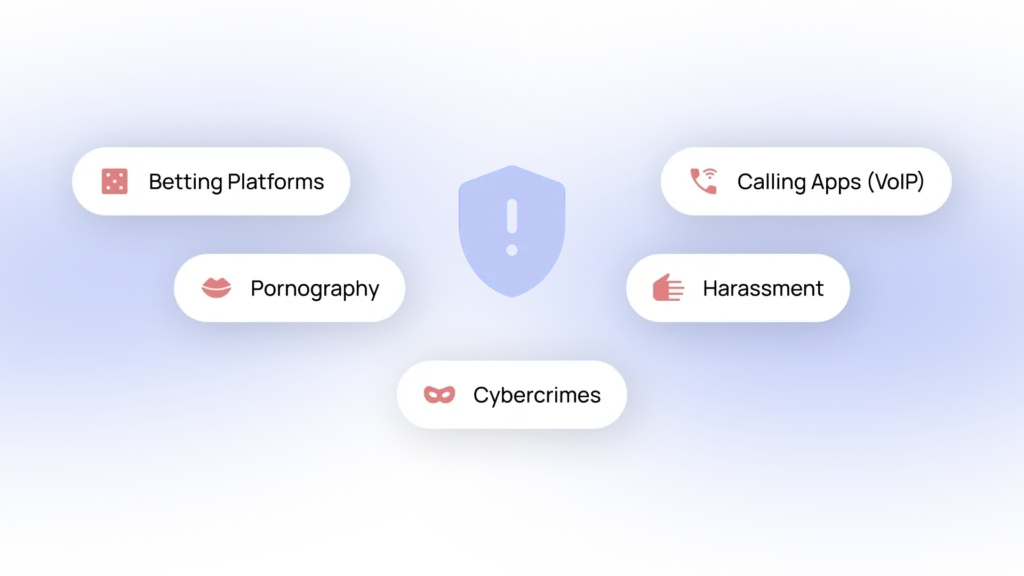
While the UAE is incredibly welcoming to tech innovation, it draws a massive, neon-red line when it comes to exploiting that technology. The legal trouble starts the absolute second your intent shifts from protecting your data to bypassing local laws.
Understanding exactly where this line sits is the best way to ensure your digital footprint remains completely above board. Let’s break down the specific scenarios where clicking that connect button switches your status from a savvy web user to a legal rule-breaker.
1. Engaging in Cybercrimes and Digital Fraud
This is the most obvious violation, but it’s the one that carries the heaviest legal weight under Article 10. If someone uses an encrypted tunnel to conduct phishing scams, execute hacking attempts, or commit identity theft, they are in deep trouble.
Masking an IP address to hide your identity while actively harming another person or business is treated with zero tolerance. The authorities view the software as a tool used to conceal evidence, which instantly triggers the most severe punishments available in the UAE cybercrime law.
2. Accessing Prohibited Content Categories
The TDRA maintains a very strict internet filtering system. Using a network workaround to deliberately access websites that violate local cultural codes or public order is strictly illegal.
This includes trying to browse adult entertainment hubs, anti-government forums, or malicious phishing networks. Think of the local ISP filter as a digital velvet rope; trying to sneak past it using an encrypted back door is a fast track to legal hot water.
3. Placing Bets on Unlicensed Gambling Platforms
The UAE has a dedicated national regulator called the GCGRA, which strictly oversees and licenses all commercial gaming operations. If you use an altered IP address to sneak into an unapproved offshore casino or sports betting site, you are breaking the law.
Doing so doesn’t just bypass the local network blocks; it actively violates the country’s strict anti-gambling regulations. In these cases, the use of a privacy tool is often tacked on as an aggravating factor, making the legal fallout even more severe.
4. Bypassing the New 2026 Under-15 Social Media Ban
The legal landscape shifted dramatically with a strict nationwide ban on social media use for children under the age of 15. Social platforms are now legally mandated to enforce robust identity checks, using advanced AI and government ID scans to verify age.
The TDRA has made it explicitly clear that children and parents are not permitted to use network workarounds to slip past these digital age gates. Trying to trick an app into thinking a minor is browsing from London just to open a TikTok account is a direct violation of the new safety guidelines.
5. The Unlicensed VoIP Calling Grey Area
This is the topic that causes the most confusion for expats and tourists who just want to hear a familiar voice. Popular features like WhatsApp video calls, FaceTime, and Snapchat calling are restricted by local telecom monopolies like Etisalat and du.
Technically, using a network workaround to access these unlicensed communication services violates the TDRA’s Internet Access Management policy. While millions of residents admittedly use them for casual chats, doing so to access illegal communications or malicious networks remains strictly prohibited.
On related note:
Best VPN for WhatsApp Calling in the UAE
What Is the Punishment for Misusing a VPN in the UAE?
Let’s not mince words here: the penalties listed in the UAE cybercrime playbook are large enough to make even a tech billionaire sweat. Under Federal Decree-Law No. (34) of 2021, the legal system takes digital mischief very seriously.
If you are caught manipulating your IP address with the specific intent to commit a crime or hide your tracks, you face provisional imprisonment. Along with jail time, the courts can slap you with a minimum fine of AED 500,000.
If your digital rule-breaking is particularly severe, that financial penalty can skyrocket all the way up to a staggering AED 2,000,000. For international context, that is roughly $136,000 to $545,000 USD.
To add a final, very permanent cherry on top of that legal disaster, foreign expats and tourists also face mandatory deportation. Your devices will be confiscated, and your luxury holiday or tax-free career will come to a very sudden end.
Real-World Context: Who Actually Gets Punished?
With numbers that terrifying, you might be wondering why half of Dubai isn’t currently sharing a crowded holding cell. The answer comes down to how the law is prioritized and enforced by local prosecutors.
There are zero recorded real-world examples of a tourist being fined half a million dirhams simply for calling their parents on WhatsApp or sneaking a peek at a European streaming library. The police have much bigger fish to fry.
Instead, the real-world cases where these massive fines are actively applied involve high-level digital syndicates. We are talking about cybercriminals using encrypted networks to execute corporate phishing scams or coordinate identity theft.
When fraudsters target local UAE businesses, swap identities to steal crypto assets, or distribute malicious ransomware, the encrypted tunnel is treated as an aggravating tool used to conceal evidence.
That is the exact moment when the state prosecutors will throw the entire legal library at the offender. So, unless you plan on launching a sophisticated digital bank heist from your hotel bed, your savings account is perfectly safe.
Can Tourists Use VPNs in the UAE?
Landing at the airport with a smartphone full of apps that suddenly refuse to cooperate is a classic tourist rite of passage. Fortunately, international visitors are absolutely allowed to use VPNs while exploring the Emirates.
The local authorities fully understand that global travelers need to stay connected to their lives, businesses, and banking systems back home. You certainly won’t get flagged at customs just for having an encrypted app on your phone.
However, the golden rule of “intent” still applies to you as a vacationer. Using an encrypted connection to check your flight itinerary securely on hotel Wi-Fi is completely fine; using it to access banned offshore sites from your beach lounger is not.
As a top tip, make sure to download and set up your preferred privacy apps before boarding your flight. Local network filters can occasionally make it tricky to access provider websites or complete new downloads once you touch down.
Additionally, remember that digital privacy doesn’t equal total anonymity. Always keep your social media commentary respectful of local laws and cultural norms, as a VPN cannot shield you from real-world defamation rules.
Meet HidzoVPN: Your Ultimate Travel Companion in Dubai
If you want a hassle-free way to unlock your favorite streaming libraries from back home or secure your personal data, HidzoVPN is a fantastic tool for the job. It is engineered to be incredibly user-friendly, allowing you to secure your connection with a single tap before logging onto crowded mall or airport Wi-Fi networks.
Unlike clunky legacy privacy apps that constantly lag and drain your battery under the warm desert sun, HidzoVPN is remarkably lightweight and competitively optimized. It quietly runs in the background of your device, keeping your digital footprint safe without turning your smartphone into a literal pocket-warmer.
Are Businesses Allowed to Use VPNs in the UAE?
If you are running a business or managing a team in the Emirates, you can breathe a massive sigh of relief. The corporate world does not function without encrypted data pipelines.
The TDRA explicitly states that companies, financial institutions, and banks face zero restrictions when utilizing VPNs to manage their internal business networks.
Imagine forcing a Fortune 500 branch in Dubai to send sensitive client data over an unencrypted network. It would be a catastrophic cybersecurity disaster.
Because of this, using an enterprise VPN for remote workers to log into the office intranet is standard, compliant practice. It is even actively encouraged to meet global compliance standards.
However, if you are an employer, there is one major operational boundary your IT department must strictly respect to keep your business fully compliant.
The corporate network cannot be configured to intentionally route traffic to bypass local ISP filtering for non-work activities. Using a company network to host illicit services is a direct violation.
As long as your enterprise network handles proprietary data, secure client portals, and day-to-day office communications, your business operations are entirely above board.
Essential Checklist: What to Consider When Choosing a VPN for the UAE
Since UAE ISPs are quite clever at spotting basic encrypted traffic, not all privacy apps are created equal. Picking a random free tool from the app store might just leave you staring at a frozen loading screen.
To avoid that digital frustration, you need to know exactly what technical traits to look for. Let’s break down the non-negotiable features your software needs to navigate the local digital landscape smoothly.
1. Obfuscation (Stealth Technology)
Local internet service providers use advanced data inspection to identify and block standard VPN traffic. Obfuscation essentially dresses your encrypted data up in a digital tuxedo, making it look like completely normal, everyday web browsing to the network.
2. A Reliable Kill Switch
Network connections can occasionally hiccup when you move between a hotel lobby and the poolside Wi-Fi. A kill switch acts like an emergency brake, instantly cutting your internet access if the secure tunnel drops to prevent accidental data leaks.
3. A Verified No-Logs Policy
True digital hygiene means choosing a provider that doesn’t keep tabs on your online adventures. A verified no-logs policy guarantees that your browsing history vanishes into thin air the moment you disconnect your session, keeping your habits completely private.
4. Military-Grade Encryption
Make sure your data is locked away behind robust AES 256-bit encryption. It is the global security standard used by banks and governments alike, meaning it would take a supercomputer billions of years to crack your private code.
Conclusion: Enjoy the Innovation, Respect the Boundaries
At the end of the day, the UAE is a spectacularly hyper-modern tech paradise, not a digital trapdoor waiting to catch unsuspecting tourists and expats. You can safely lock down your personal data, secure your remote work, and browse with total peace of mind.
The golden rule here is simply to let common sense guide your clicks. Just treat your digital behavior with the same politeness and respect you’d use while walking the pristine streets of Dubai, and your tax-free career or dream vacation will remain entirely unbothered.
FAQs
It is completely legal. The software itself is officially recognized as a legitimate tool for personal data security, online banking, and corporate remote work. It only becomes illegal under Federal Decree-Law No. (34) of 2021 if it is intentionally used to commit a cybercrime, execute fraud, or access heavily prohibited web content.
Yes and no. Local internet service providers use Deep Packet Inspection (DPI) to easily detect that you are connected to an encrypted network workaround. However, if you are using a premium app with AES 256-bit encryption, the authorities cannot see what you are doing inside that secure tunnel.
This is a major regulatory gray area. Because the UAE restricts unlicensed voice and video over IP (VoIP) services to protect state telecom monopolies, using a network workaround to unblock WhatsApp calling technically violates local policy. While millions of travelers and residents casually use it to check in with family, it remains a technical violation of local guidelines.
No, there are no digital border patrols scrolling through your phone apps at customs or on the streets of Dubai. The authorities are focused on stopping serious electronic fraud and cybercrime, not auditing your device’s security settings.
Legally speaking, local prosecutors aren’t hunting down tourists over their streaming habits. However, doing this technically violates your streaming provider’s terms of service. That means your biggest risk is an annoying error screen from the app, not a legal issue with local authorities.
Article by
-
 Sam Clarke
Sam is a cybersecurity and online privacy writer dedicated to making complex network protection accessible, practical, and engaging.





Share your thoughts
Add a comment